THE ADVERSARIES
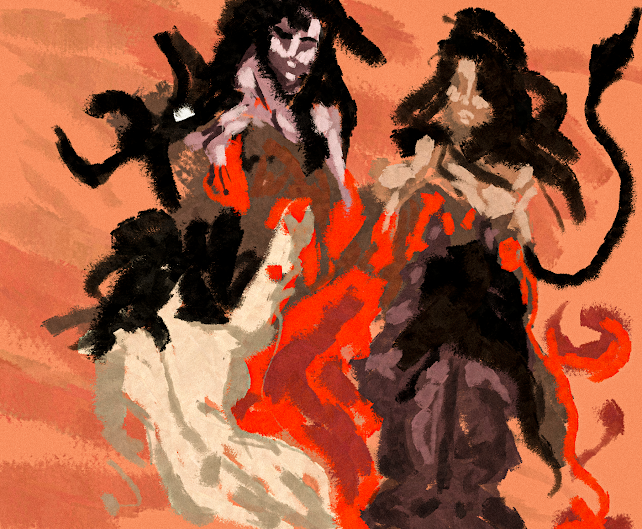
Those two watching from either side of the statue of Diana - they are Rezon and Hadad, wizards and wizard-hunters - their pseudonyms after the satans of Solomon.
They are employees of Mr. Ulrich, and their function is to maintain peace in the Club (and Ulrich’s peace beyond it, if need be). Their methods for doing this form a three-stepped structure - first, strong words in English, then very strong words in Spanish, then hot lead speaking American - the Colt 1855 dialect, that is. The fourth and fifth steps are their own dark mysteries, but I’ll clue you in - they head back in time towards Latin for four, and for five to Etruscan, the name of Vanth, and poison rites of death that the immortal Ulrich now finds useless, and in which the Adversaries find none of the appropriate terror.
Rezon is surely Spanish, from his speech and his particulars. He seems to literally always be smoking, head wreathed in a halo of grey - he was once a member of the Garduña, born in Madrid to a prostitute and a heretic priest, and the world has never given him anything but beatings. His appearance is striking, with thick black hair, huge eyebrows, a beaklike nose, and eyes which never seem to blink, a thin mouth and bright white teeth, which hide a razor tongue that never fails to launch barbs when it can. He is tall, and uses this god-given advantage to lean over people he is talking to. The guests at the club mistake his name for “Raison”, though he himself lacks a Rezon d’etre - he is pure of heart, that much is true, but it is a purity of spite.
Hadad is Colombian, of Muisca ancestry, leather-coloured, friendly, laconic even to a fault, patient like an alligator is, and also friendly like an alligator is. Hadad is incredibly muscled, scarred in any way you care to think of. His parents were loving, which did not save them from disease, and his Jesuit teachers were friendly, which did not save them from brigands. Quite unlike Rezon, Hadad sees in the world a plain and radiant beauty that no covering of human blood and shit could ever suppress - even in the black bulk of London, he sees the divine art of the world, the light of Chia, the moon, Sué, the sun, and Jesus Christ, the saviour.
Both men were once toreadors - bullfighters, tauromachists, for entirely different reasons - for Rezon, spite and glory. For Hadad, mortification of the self.
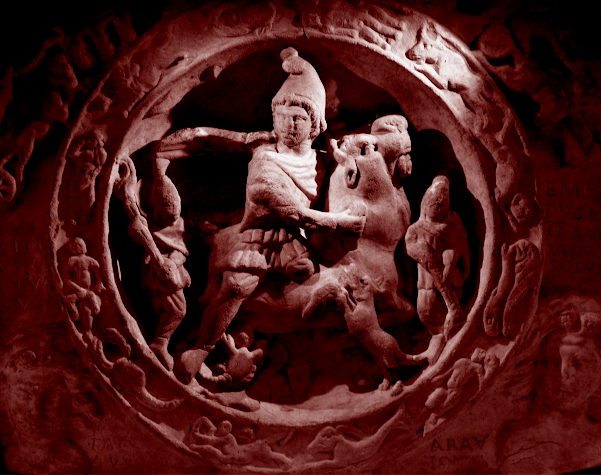
They’re not quite Tauroctonists, like old Silvanus, but he found it easy enough to make them Mithraics and teach them the simpler astrological methods. Each is crudely attuned to Mars and martiality, and, when properly prepared, moves and fights like a hero of old. This is how they’re equipped. That, revolvers, and a thousand tongues’ worth of unspeakable curses, of course.
THE ARTIST
“Enid”, not her real name.
A friendly pornographer and tattoo artist, once nearly a druid and nearly a witch, born in Wales and raised in Manchester, a wanderer in Scotland and a fairy prize in the Highlands, for a short time.
Herself cursed by Nicneven, she inserts the Erlking into her work as a Dionysian prayer to him, a request for intercession that would startle even the most permissive scholar of salvation.
She told Nicneven who she was to her face. Truthfully, say she, you may be a master of witches, of the bloodline of Scathach, queen and fairy-blooded too - but no more than the Gael-queen of all the exiles and goblins on the borderland - Britain. And, worse, she joked, married to Aengus’ bastard German son!
So many curses were laid on her that most of them cancelled out - only the intervention of some unknown benefactor had her still human, and not some beast of the field - the marten nearly won out, and she turns bristly and sinuous when she’s angry - the jackdaw nearly won out, so her eyes are startling grey and her black hair sheens silver in the moonlight - and the wolf nearly won out, so she sickens after near any dish but raw and bloody meat.
Earrings of flint elfshot give her a Satanazian air. She is the guest of the man sitting across from her, who is trying and failing to court her for reasons clear to neither her nor him. She loves the individual human form, which is the earnest reason she got her start as a pornographer.
THE NOBLEMAN
Oliver Cable, the Earl of Kay, the junior cousin of one Lord Walton-Cable - he would cause a small scandal if he were seen here at all. That is, he does, by being seen here every Sunday night. Handsome, beardless, sculpture-faced, he looks a little bit like a statue of Apollo (or perhaps a Renaissance Lucifer).
He is the man failing to court Enid. The courting began as sort of an obligation he’s putting on himself, an act of conformity to expectation (the history of the Cable family is a history of done things being done), but as he spends more time with her, he is becoming more and more frightened by the flickerings of an overpowering, glorious, but unfamiliar feeling (it is love, and it is new to him).
Cable serves in the Peerage Obscure as the Chairman of the Stone that Held the Sword, which is a role that is entirely ceremonial, save when it comes to the crowning of the Secret King of England. The Sword from the Stone was broken by Pellinore long eras past, but the Stone remains. In this capacity, he has the poor luck of sitting next to Lord Dagonet, the court-jester of the Enlightened House, who likes to break eggs on his head.
One such occult coronation approaches, prompted by omen and politics - the Secret King will be crowned to rule over the Invisible House. Or so it’s hoped. What is feared, however, is that civil war between the two occult parliaments of Britain will cause chaos. The Clupeum Rubei put forward a practitioner of Rosicrucian magic, descended from Arthur (through Mordred), a devil-may-care adventurer sort, an occult archaeologist, married to a fairy princess, with the inexplicable nickname “End Rod”. The Peerage Obscure put forward a Hermetic sorcerer related to Merlin (through the Devil), a hangdog and fire-eyed Scot who is literally from the last century, petrified by a gorgon (his ex-wife) until merely twelve years ago. For this, they call him “Limestone”.
Cable is disgusted by most human bodies - especially his own, which is why he pays to have it whipped every Saturday night while he watches dispassionately, aloofly satisfied, but inescapably repulsed. He sincerely hopes that he will get Enid to the altar, then the marriage bed, and then she will rend him apart with taloned claws, dig a beak into his entrails, or perhaps drag out his eyes with a sting like a ray.
THE DRUIDS
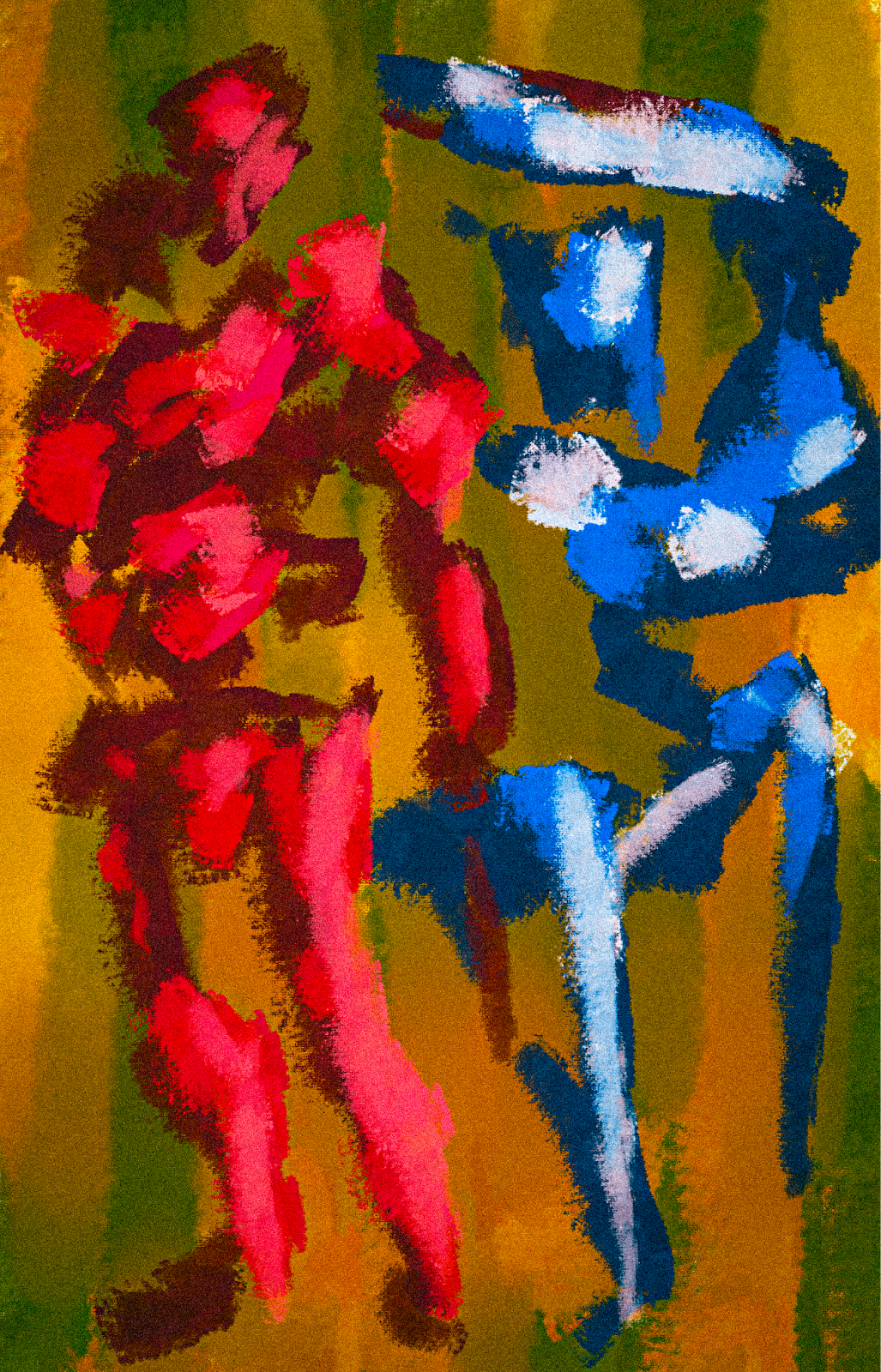
A member of The Body (a group that Parliament would class as druidic seditionists).
The Body was inaugurated among the Catuvellauni tribe in Pre-Roman times, and, indeed, it was created expressly to fight off the Romans - originally, only what we might now call Brythons, Gaels or Picts were allowed as members. However, as the new invaders arrived, the Body grumblingly accepted those they classed as Romans to drive off the Angles, Saxons and Jutes. Then, as the next set arrived, they grumblingly accepted the Angles, Saxons and Jutes to fight off the Normans. Then, finally, and most grumblingly, they accepted Normans to try and drive off the Germans.
You may begin to notice that the Body’s career is generally dominated by capitulation and failure. They have a complex about this, generally speaking. The members suspect they may next be forced to accept Germans to drive off Americans, Indians or the Turk. Still, what they have done is survive in the area since before Christ, which is certainly more than the fucking Romans can say, isn’t it????
Their nemeton hidden near Kew was here before Londinium was, and they strongly believe it will be here after it, too - even as the city springs up around it. The Botanic Garden is a defence mechanism for the nemeton - like the calyx around a flower.
The members present on this fine night are, within the group, named Hand and Entrail.
Hand’s name in mundane society is Mrs. Sunday Meade, a doctor’s wife, and Entrail’s is Mr. Edgar Jeremy, a banking clerk.
Sunday is dressed like a proper gentlewoman, but only to hide that her body is entirely covered in blue foliate tattoos, fairy-contracts in red, gold piercings, and inked-in scenes of human sacrifice. Her doctor husband is a changeling fairy whose multiple cases of medical malpractice would probably be better-classed as medical whimsy.
Edgar might easily be mistaken for her snivelling manservant, because he waits on her hand and foot, but he is, in theory, her peer. He is a shapeshifter, sometimes a king stag, and when he is a deer, he is mad and goring and proud, but when he is a man, he is a waifish coward.
They’re not members, but Ulpius lets them in due to an ancient pact of tenuous friendship between himself and the Body, dating from Saxon times. That, and he finds their subtle machinations against him a good spot of weekend mental exercise - later, they will be replaced with crossword puzzles.
THE MASON
Gideon Coffin, an American Freemason cursed with avarice. Here to seek out Profit, to build Profit a house, to love and serve Profit. He is crisply modern in a fashionable new suit, a shade of charcoal grey. He’d be run out of Parliament, but fit right into the Bank of England. His pale head is like a roman marble bust, blonde hair turned coppery in the red lights of the Club, like debased gold.
Originally, he was from Cincinnati in Ohio - perhaps his soul was weakened by the things occurring there even now… or he’s just Ohioan. Once, he worked at The Museum of Dangerous Books and Paper in Williamsburg, after an unsuccessful stint with the Lodge in the capital, where he found the atmosphere rather stifling. He managed to learn only some of the Platonic mathematical antimagic - certainly not enough, anyway.
Williamsburg served as his little haven of learning and Latin, until he unearthed an ancient text discussing the rites of Fortuna Privata, a Roman goddess of the luck afforded to the private citizen.
Unfortunately for him, Fortuna Privata, as a title, had been usurped by the newborn god, Capital. As he read further and became drawn into the Fortunate mysteries, the Invisible Hand gripped his mind with images of resource extraction, organ traders, pork futures, tontines and stock tickers. Lacking appropriate psychospiritual defences, he was caught in mort gage and consumed.
Capital is also trinitarian - the Invisible Hand goes reaching and grasping, seeking all over the world for the elusive, redemptive Profit. The Market provides omens at her omphalos in Wall Street (for now, the financial centres of the City of London are still the haunt of that great ghost called Empire, and the newborn god must be careful not to be devoured by many-fanged Britannia, where she crouches on top of the mountain of bones.) Finally, Wealth sleeps, divided like Adam Ruhani across the world. Robber barons and oil magnates compete to assemble him, hoarding ever more pointless lucre till the many faces on the bills begin to resemble the mask of the divine. Once the Egg is built of treasure, the true Capital will hatch… and then the fun will really begin.
These are the thoughts which hammer through the halls of Coffin’s mind like subway trains smashing through the halls of Congress. Coffin is out of place in these pseudo-epicurean environs, and everyone can tell it - especially Mr. Ulrich, who once prayed to Fortuna Privata (the real one) and has no clue what the fuck Mr. Coffin is talking about. Behind his eyes, there is a glassy, banal marketability - he is assessing all of this as an asset, like a snake assessing if it can get its jaws around a carcass.
Ulrich tried to charge him quadruple for the membership, and he paid it.
THE JEWELLER
A small, stout woman wearing a shop’s worth of jewellery. Fingers covered in rings, ears pierced with so many earrings, a neck thick with necklaces. Under her dress she’s practically wearing a byrnie of gold chains, a gem-set girdle, garters decorated with silver discs. She literally clinks and rattles as she walks around. It sounds like spurs.
She is from London itself, and her name is Charity Goldsmith - yes, yes, she’s quite aware of the irony, no, her parents are not involved in the occult world, no, she doesn’t wear her gold and jewels walking down the street - but she does wear them when she is doing magic, which is what she is doing in the club - manifesting lucre for anyone who visits her table. She goes about this with the cheer of a nurse on the night-shift, making money by making money make money.
Ms. Goldsmith (she will never marry - men disgust her) is a servant of Plouton, Pluto, Dis Pater - all names for the same figure, in her mind, the vault-keeper of the ancient world where everything was better, simpler, purer and brighter. The only thing that persists from one life-age of the earth into the next are the gold relics, she is certain - the gold relics and the statues. Flesh is weak, and blood is cheap - stone lasts, but she’s never had sculptor’s hands, so for her it is the way of the planishing hammer and the loupe. She is viciously no-nonsense, willing to reach over the table and saw your fingers off with a knife if she is under the impression she has been short-changed or otherwise messed with.
These days, she often feels messed-with. Especially when she looks at the bland smile of Coffin. Through him, she senses a force now is loosed in the world, which is turning what powers her to ash and salt - lucre is becoming capital, and gold is becoming air and fiat. For the old gold, she plans to hunt Coffin like a game animal, make pearls of his eyes, diamonds of his teeth, quicksilver of his blood and turn his bones into silver. But murder a thousand bankers - the old thrones have peeling gilt, and the ones coming down the line, well - she doesn't know what plastic is - at least, not yet.
THE SAILOR
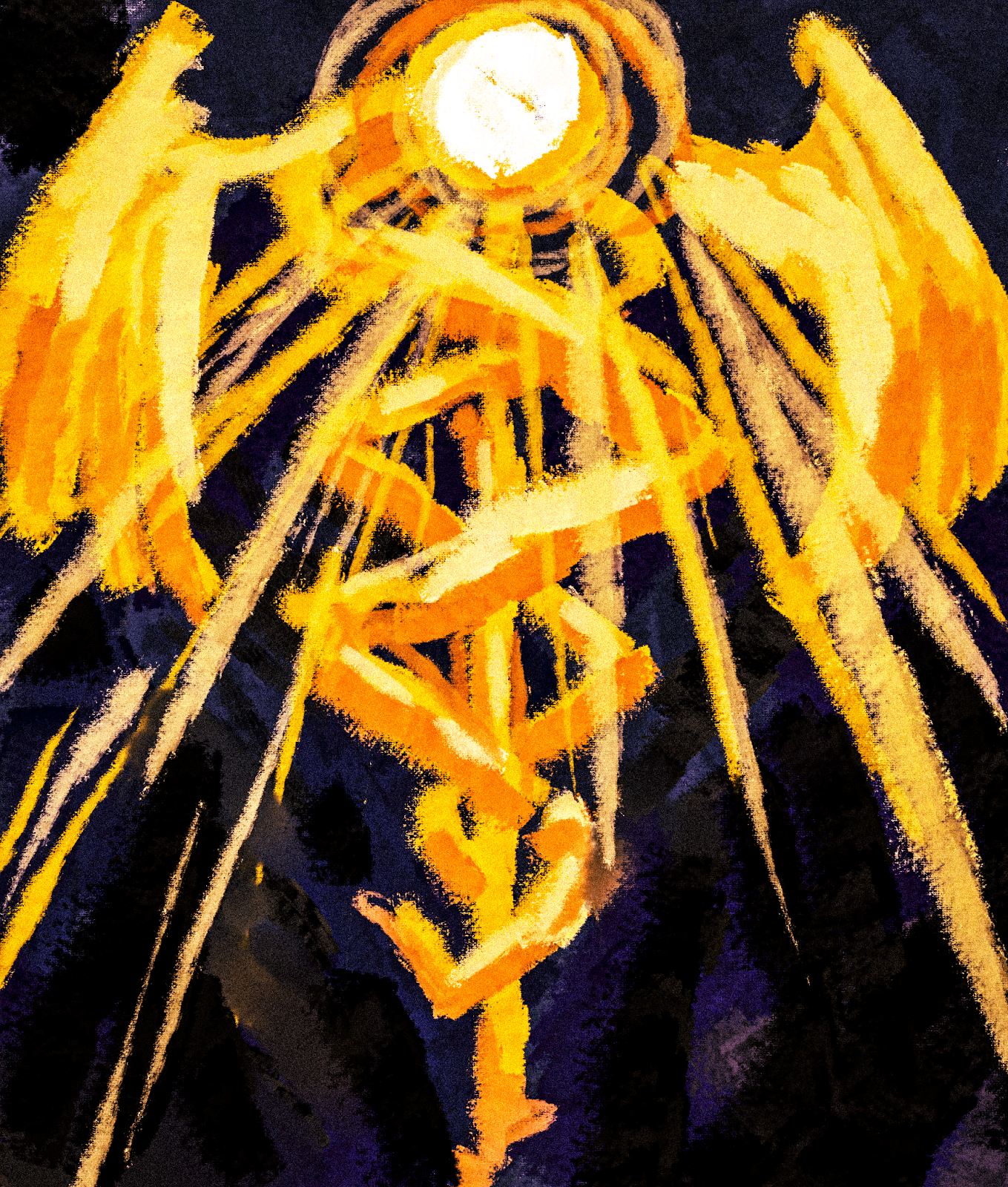
Leaning by the bar is Mercedes (no surname given to you), a Tagalog katalonan came here through the sea-roads from Luzon. She comes from the city of Tuguegarao. She is the deadly foe of a deep-sea angel and an ancient whale-king, but those are tales for another day. On Luzon, she is La Sirena, to some - she could whisper your knees weak, curse to burst your eardrums - her tongue-twisters twist tongues.
She is a naturalist. Cataloguing fish, octopi, jellies, all beasts of rivers, estuaries, bays and seas she can find, in a neat book defended within by the shadows of sharks. She too is reading On the Origin of Species, and talks about it with Mr. O’Neill. Recently, she summoned Old Father Thames with his basket and his shovel, to consult him about eels.
She is beginning to understand the enormity of her self-set task. The varieties of fish are endless, and maddening, and evasive. The Sea is a realm all its own. Even God’s light can only shine in thin rays.
She has walked the antediluvian halls of Atlantis where the great brass machines decay day by day in the jealous embrace of the Mare Perditium - and swum through the submerged jungles of ghostly Lemuria (that whole story with the cute primates was just a cover up - Lemures are the restless dead, and that pacific tomb still stirs, and the opalised palaces of Mu still open their doors on full moons. )
She has attended ceremonies at seafloor vents, on which an aquatic pythia of Poseidon drinks in the exhalations of the underworld at the nexus of the currents of the world - the omphalos of the Sea - she has seen the realms of the mer, sunken Ys and Kitezh, whole worlds eaten by liquid glass and the sting of salt.
And worse, besides, deeper down, armed with maws, razored fins - and lures, for curious sorcerers. Many have not survived where she did, where the ocean runs out into black, cold darkness.
THE REVOLUTIONARY
Sitting at the bar, talking to the Sailor, is Csiszár Dózsa, a massive Hungarian who you’d think was half scars by body weight. Wild-haired like a wose, with pale sepia skin, he was born cicatrized all over, leading to a csufnev, an unpleasant nickname, from his time as a boy - Hegek (it means “Scars” - nobody said it had to be creative, just pejorative).
The cicatrizant element was a curse laid on his mother by a witch (his mother was also a witch, but he swears by God that she was the good kind, with a wide and torn-up smile). Mr. Csiszár is exceedingly likeable - he has a personality like Thomas Aquinas, a quick wit, a generous manner. He is from Keszthely, and in 1848, he was wounded in the Revolution (there’s always a Revolution) - he’s been in pain his whole life, but at least he didn’t limp - so he jovially complains to other visitors to the Club.
After his wounding, he wandered Europe for 10 years, getting into misadventures. He robbed jewels in Bohemia, married a Slovakian duchess for one day (she was also cursed, you see), he served as the bodyguard of a Suomi witch in Helsinki (and thought they might be married, for a time, til she was eaten by a giant spirit wolf), then battled the Cult of Ba’al Hanni in Barcelona (those of the miracle of elephants in unexpected places), then narrowly avoided being slain by an angel in Paris, then wrestled a werewolf in Berlin, then punched an ancient vampire in the chops in Gdansk.
Finally, he met the Devil in Pinsk, and took the chance to shoot him thrice for the good of Christendom, but all he did was give Scratch the bullets to use in some classic Freischutz down the line. To his regret - the spirit went out of him.
He has retired to London, fingers covered in rings and his back covered in spirals of scar-tissue, to sulk and ponder on his life.
Or, well, that was the plan - talking to Mercedes and hearing tales of Asia, his fire is re-ignited barely a year after it went out. In July he will get on a boat, and get lost in his next great adventure.
THE PROFESSOR
Specifically, Professor Abraham Pinheiro, a Sephardi Jewish man originally of Amsterdam, but a resident of London for some fifteen years, as part of a long-form anthropological study of the occulted world of London. A small, grey man, modestly dressed and exuberantly bearded, he has a quiet step and a delicate touch in social matters. He was practically born to be a rabbi, but seems to have quietly stepped through a nearer door in the long hallway of fate.
Abraham is the professor of anthropological studies at Alma Mater Studiorum (an occult institute cloaked in the University of Bologna). He spends time at the No Collars Club academically, abstaining from drinking and smoking, carefully observing the comings-and-goings of the dissolutes that stalk the erythraean halls. He has deduced exactly who and what Mr. Ulrich is, which, to his surprise, earned him a membership for life instead of trouble when the proprietor discovered it. Ulrich likes intelligent people, and Pinheiro is a mind for a generation - albeit a mind singularly fixated on the mysteries of misbehaviour.
Situated in his own private reading-room in the Club, which increasingly serves as his office in London, Abraham Pinheiro writes. He writes poetry about the human body, “case files” about Mr. Ulrich’s guests, reviews of the forbidden books that the Club has collected, and letters to his counterparts at an institute of occult study in Japan, which uses the Seimei Jinja as its mask. Abraham Pinheiro also reads - he reads grimoires, Enochian epistles and Pagan jeremiads, Druidic testimonies and dragon-tongue scrawlings bound in bullskin.
And he reads newspapers - piles of them! One could not see the professor from the door of his private room, hidden as he is inside his fortress of knowledge. News about the fool-headed politics of William III of the Netherlands, the crucible of Italia, and the heroism of old John Brown, across the Mare Perditum in America. He especially likes the New-York Daily Tribune, and the articles in it by one Karl Marx, who sends his work to America from London, to have it sent back to London for the professor to read.
He is especially interested, however, in a rising figure in American politics, by the name of Abraham Lincoln. He has always liked the name Abraham - chiefly because he himself possesses it.
THE CORPSE
Sitting still, Thomas Orford perfectly resembles the corpse of a man in early middle age. This is because he is dead. Yet - he moves. This is pretty disquieting. Ulrich thinks it’s a riot. He keeps checking if Orford’s got flies yet.
Orford doesn’t much like Ulrich, but where the hell else is a dead man going to get a gin and tonic?
Orford is a disgraced exile of the Clupeum Rubei, which really means he’s the bottom of the barrel - an exile from a group of exiles.
He sits here dressed for the wrong weather in a greatcoat and welsh wig, his hands are bandaged up, but they move the gins to his cracked lips with an easy, inhuman steadiness. His feet have no toes left, just a blackened raggedness he struggles to balance on. He goes about on crutches.
Once, Orford was a perfectly normal captain in the presidency armies of the EIC, until a vampire drained him nearly dead in Sind. Orford’s awakening into the hidden world was both sudden and traumatic, and once he got himself back to London, he found himself unable to return to the living world. He was shipped back in a coffin, by a sympathetic but useless doctor and a Jesuit who offered him a letter of recommendation.
That letter led him to the friendship and employ of one Lord Poison-Shrew, a member of the Clupeum Rubei, whose evil-sounding name once belied a generous and kindly nature, but with the passing of a bad decade of gin and bankruptcy now accurately describes the fallen lord. When John Poison-Shrew made an enemy of the Clupeum, Orford was tarred by association, and forced to flee to enemy territory, to London, to find a bolthole. This is it. The bolthole - a pagan’s den of vice buried under the soil, full of foreigners, women and madmen. He hates it, and he’s worried about the rot setting in.
And Ulrich keeps checking if he has flies.
THE HUNTRESS
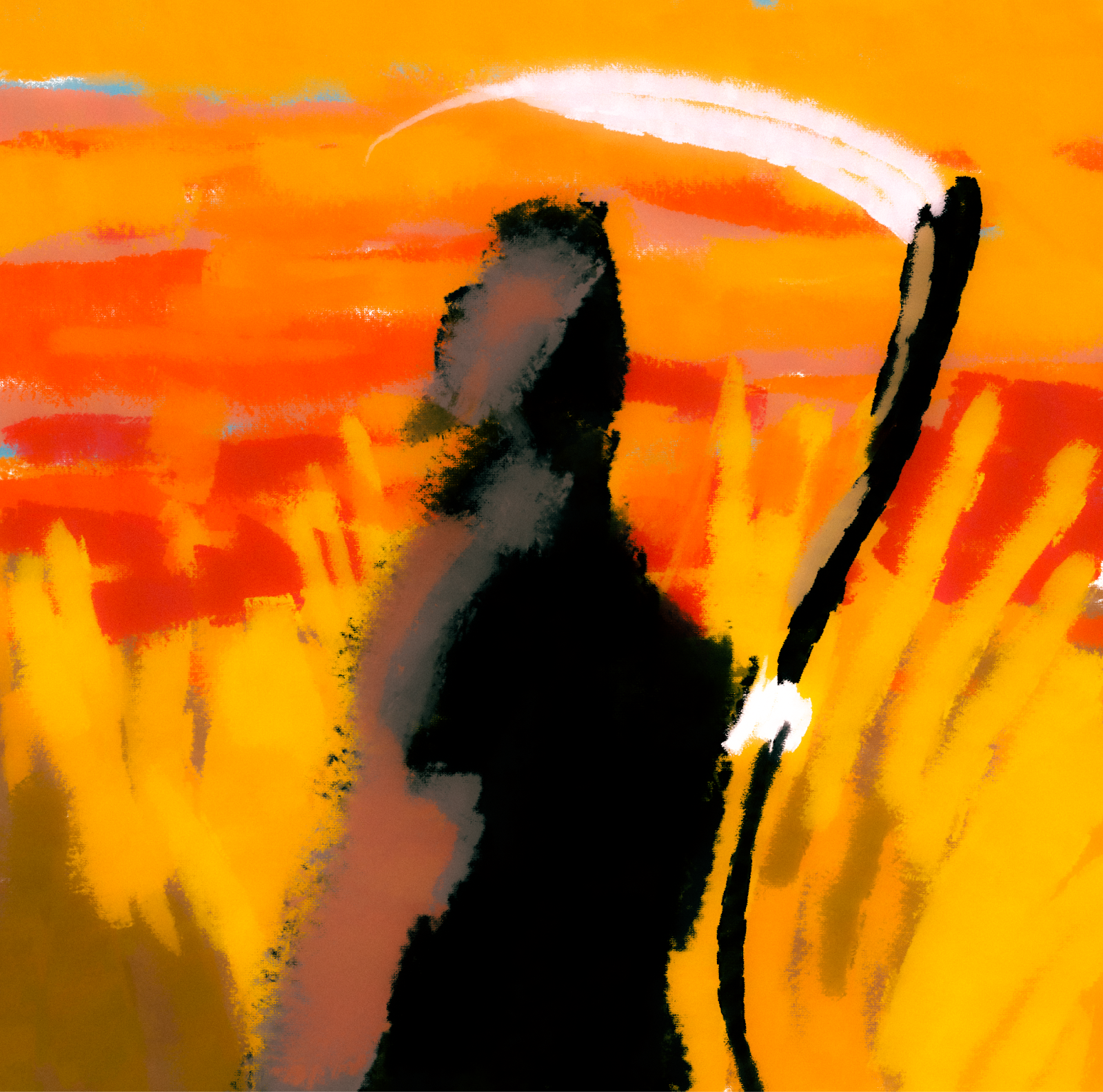
An Alawite woman from Latakia, called Farrah Suliman. She is most often wearing a hunting dress, a rose-coloured hijab, and sensible boots fit for running in. She is most often seen in a state of meditative poise in a dark alcove, considering, envisioning, running her hands over her trophies - horns, tusks, antlers, long-bones, gut-stones, vertebrae and curved talons, all from mythical and inhuman beasts she has tracked, wounded, and slain. She is a huntress, and a fighter, who specialises in the long rifle and the whisper-sharp sword.
Her father was also a hunter, but he was shot to death by a game he was not prepared to hunt - humans - in the Nusayri Revolt. Since then, Farrah has been a wanderer, never returning to her homeland, moving through Mediterranean Europe slaying beasts and residing in the company of other inhabitants of the occulted world. Suliman worships her family’s ancient goddess, the Queen of the Hunt, Astarte, and is also a Muslim, and finds no issue in combining the two strands of faith into one braided cord.
She paid for the highest class of membership with a fresh manticore’s head, which Mr. Ulrich had no use for, but he found the idea of paying for a membership with a manticore’s head so charming he accepted it immediately. The bones, flesh boiled off, hang high above the Billiards Room, which is Farrah’s lair of choice. She is pleased when other members of the Club take interest in her hunts, and she is happy to explain that she has heard tell of the Questing Beast which bedevilled Arthur, and plans to find it and take its head. Cable and the Drunks, to amuse themselves, call her “Lady Palamedes”, a reference she does not get. She finds their smirking manner irritating.
Her bedroom at the club is shared with a collection of shamshirs and rifles, three or four finely made Qur’ans, and a great weight of carved-off pieces of God’s creation. Every night, she dreams the same pleasant dream - Zulfiqar gleaming against the sky. It soothes her in a way words can hardly express.
THE WOUNDED MAN
The name of this man is John Damnation Culpepper - he is a veteran of the First Opium War, and a former Royal Marine. Bristle-bearded, wild eyed, full of a visible evil, he sits in the darkest corners of the Club, like a tiger with a broken leg, stuffed into a man-suit that barely fits. Mr. Culpepper was quite the titan when he could walk - he reminds Ulrich of a hobbled Hercules. His cane isn’t a cane sword, it’s just a bloody heavy length of wood. He doesn’t need some fancy blade to bludgeon you until your brains splatter across the hems of his trousers.
The Second Opium War is ongoing, and he’d really like to be over there, but they ruined his bloody leg at the Second Battle of Chuenpi - shredded in a magazine explosion. He has a patronising, intense, colonial love of Chinese culture, and jokes of having himself made Emperor, someday.
Culpepper likes the atmosphere at the Tauroctony - he finds it appropriately dark for his sensibilities, and appreciates Mr. Ulrich as a fellow veteran (though he assumes, incorrectly, that he saw action in the Afghan War of 1838-42, and not, in fact, on Hadrian’s Wall). He likes to spend time here away from his wife - Mrs. Culpepper is a person of charity and grace, a saint in other circumstances, and, like fire and water, Mr. Culpepper instinctually understands that one of them would destroy the other, should they get a peek into their soul. As such, they really only meet to sleep at night, and engage in marital duties every second Saturday or so.
Culpepper employs a Formosan manservant called Qalutsangal, who is far smarter than his employer, and quicker, too, if less physically powerful and animally charismatic. He smokes cigarettes, and dresses like an Englishman by his employer’s command. Qalutsangal can see where you are weak, it’s part of why he was hired - his eyes are impeccably, unnaturally keen. Qalutsangal is a soft-stepping type of fellow - at first, for him, London may as well have been the Moon, for all that was familiar about it. However, as his dreadful employer began to frequent this bizarre pit, he met more fellow travellers in strangeness. Qalutsangal is on the lookout for new work.
THE DEMONS
Two demons, pretending to be Americans, which they find wonderfully easy - nearly as easy as pretending to be English, Spanish or Dutch. They pretend to be a married couple - each is ashamed of it, secretly enjoys it, and also enjoys the shame. They are not by half the scariest demons in London (nor even by three-quarters), but they are certainly the most repugnant.
Demons can only conceive of the antichrist as a big evil man who will come around and be cruel and evil, so they are preserving him a hunting-ground. That hunting-ground is called “Ohio”. These two say they are from Ohio, and that they’re here on “business”, non-specific. Ulrich has discerned precisely what they are, but he also hates Christ, so he shrugs, laughs and sneers.
Their aliases are Mr. John Bishop and Mrs. Jane Bishop (cut off from divine light, this is their most creative effort, and they scream scream scream laughing about how clever they are, stabbing each other tangled up in bedsheets in their room at night). John Bishop has a face like someone caught out of the corner of your eye - entirely unremarkable on closer inspection, dead-eyed, with a wine-coloured tongue, always drinking something, always drinking something, damned with a dry throat. Jane Bishop is strikingly beautiful, with gouging blue eyes and a hungry look about her. She has a long, elegant neck and long, elegant limbs, but is never taller than John, even though if you measured all of her parts and all of his, she would sum up greater. Her stomach is always growling.
Droughts and famines are their favourite things in the world. Mr. and Mrs. Bishop’s “business” is wanton cruelty, blind and stumbling madness - they’re not even major enough to have an agenda. In some ways, they’re like wild animals, but a thousand gallons of blood and a thousand tons of meat won’t make them any less thirsty, any less hungry.
They would kill to protect their true names, kill quickly and unavoidably with power that would outstrip even a strong sorcerer - so I won’t tell you. But they’re not famous (not like the third demon in London) - you haven’t heard of them, you haven’t heard of them, shut your eyes.
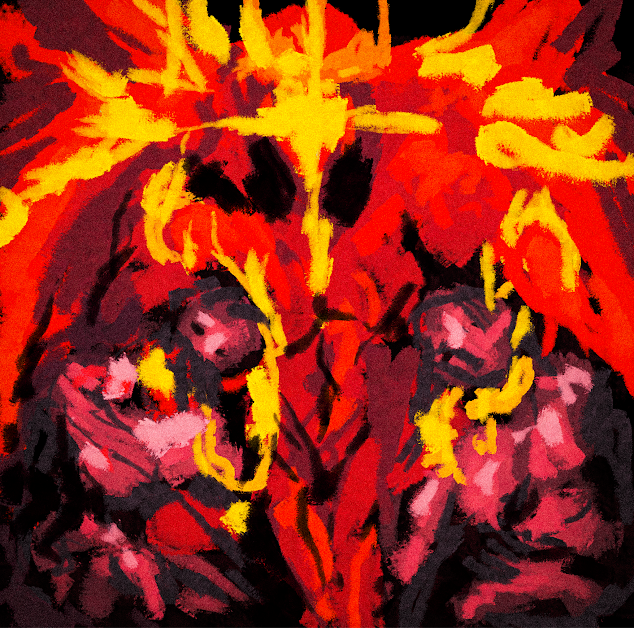
In 118 Years, when the Dreadfuls are long forgotten, the slasher films will paint cinema-screen walls with buckets of blood, and the Tauroctony Club will still be here - still dark, still smoky, still red and vile - and Ulpius Silvanus will still sit in the depths of it, like a moray eel, inside a rock - waiting to bite.